

Severe storms, flooding, high winds, and other weather events can create environmental risks for industrial facilities. Chemicals, fuels, waste containers, equipment, and other materials may be exposed to conditions that increase the possibility of releases or damage.
Preparing before severe weather arrives gives facility managers an opportunity to identify vulnerable areas and establish procedures for responding if an environmental incident occurs.
Identify Areas Most Vulnerable to Weather
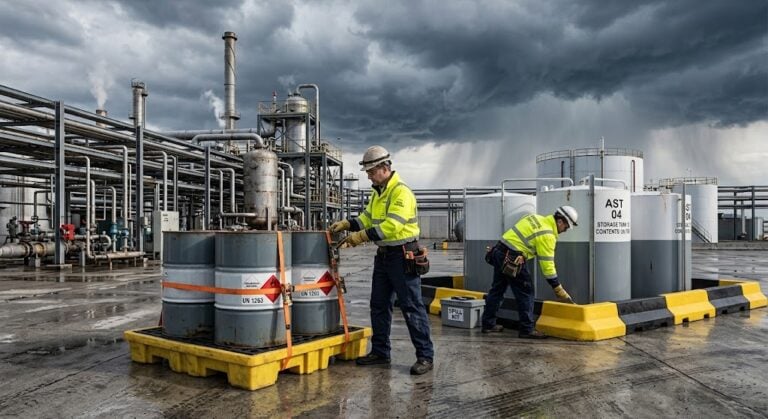
Facilities should evaluate outdoor storage areas, loading zones, tanks, drums, waste containers, drainage systems, and other locations where weather could affect stored materials.
Particular attention should be given to:
- Containers located outdoors
- Aboveground storage areas
- Waste accumulation areas
- Fuel and chemical storage locations
- Drainage and stormwater pathways
- Equipment vulnerable to flooding or high winds
Secure Materials Before a Storm
Loose containers and equipment should be secured where appropriate, while storage areas should be checked for potential pathways through which spilled materials could reach drains, soil, surface water, or neighboring properties.
Facilities should also verify that spill response materials are accessible and that employees understand who to contact if a release occurs.
Review Emergency Response Procedures
Emergency procedures should identify responsibilities, communication methods, access requirements, and escalation procedures. If an incident occurs outside normal operating hours, personnel should know how to initiate the response.
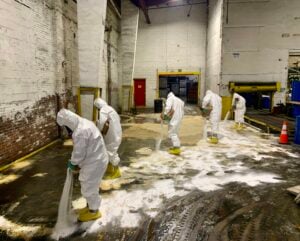
O6 Environmental provides Emergency Response & Clean-Up services for incidents including oil and chemical spills, leaking containers, pipeline releases, industrial incidents, and other hazardous-material emergencies.
Consider What Happens After a Release
Storm-related incidents may involve more than immediate containment. Once a release has been controlled, facilities may need to address contaminated soil, water, debris, equipment, or other materials generated during cleanup.
Environmental remediation may be necessary when contamination extends beyond the immediate source area. O6 Environmental provides Environmental Remediation Services addressing contaminated soil and groundwater as well as source removal and other site-specific remediation needs.
Use Post-Storm Inspections to Identify Problems
After severe weather, facilities should inspect storage areas, tanks, containment systems, drainage pathways, and other environmentally sensitive locations. Documentation of damage and any releases can help guide corrective actions and future preparedness.
Post-storm inspections can also identify weaknesses that should be addressed before the next severe weather event.
Building Weather Preparedness Into Environmental Planning
Severe weather cannot always be prevented, but facilities can reduce environmental exposure by preparing storage areas, reviewing response procedures, maintaining spill equipment, and identifying vulnerable locations in advance.
For facilities with significant chemical, fuel, or waste inventories, proactive planning can help reduce the environmental consequences of an unexpected weather-related incident. Contact O6 Environmental to discuss emergency response and environmental risk management for your facility.