

The selection of sites for data center development has become increasingly constrained by land availability, infrastructure proximity, and power accessibility. As a result, developers are increasingly evaluating previously used industrial properties, including brownfield sites, as potential locations for new facilities. While these sites can offer strategic advantages, they also introduce complex environmental liabilities that must be addressed before construction can proceed.
O6 Environmental supports regulated industries in assessing and managing these risks through structured environmental evaluation and remediation planning. For data center projects, early identification of contamination and regulatory obligations is essential to avoid delays, redesigns, or long-term compliance exposure.
Understanding Brownfield Constraints in Data Center Development
Brownfield properties are defined by the presence—or potential presence—of hazardous substances, pollutants, or contaminants that may complicate redevelopment. In the context of data center construction, these constraints can significantly influence site feasibility, particularly where subsurface conditions may affect structural foundations, utility corridors, or long-term operational stability.
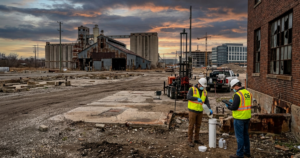
Unlike greenfield developments, brownfield sites require a layered assessment approach that considers historical land use, potential contamination sources, and existing environmental data. These sites may have been used for manufacturing, energy production, chemical storage, or logistics operations, all of which carry varying levels of environmental risk.
Before any construction planning begins, developers must understand whether remediation will be required and how it may impact schedule, cost, and permitting pathways.
EPA Liability Considerations and Regulatory Exposure
Under federal environmental frameworks such as CERCLA, property owners and developers can assume liability for contamination even if they did not cause it. This “strict liability” structure makes environmental due diligence a critical component of site selection for data center projects on former industrial land.
Regulatory agencies, including the U.S. Environmental Protection Agency (EPA), require that contamination risks be identified and addressed before redevelopment can proceed. Failure to adequately assess environmental conditions can result in enforcement actions, cleanup orders, or long-term operational restrictions.
Developers must also consider the implications of institutional controls, land use restrictions, and long-term monitoring requirements that may remain in place even after remediation activities are completed.
Environmental Due Diligence as a Site Selection Tool
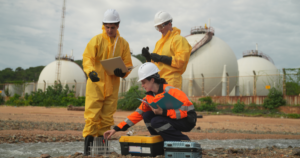
Environmental due diligence is a critical step in evaluating whether a brownfield property is suitable for data center development. This process typically includes Phase I and Phase II Environmental Site Assessments, which identify recognized environmental conditions and confirm the presence of contamination where suspected.
These assessments provide the technical foundation for understanding remediation scope and regulatory obligations. They also help determine whether a site can be integrated into a development timeline or whether environmental constraints make it economically unfeasible.
O6 Environmental provides structured evaluation and remediation support through its Environmental Remediation Services, helping developers understand contamination risks and align site conditions with regulatory requirements.
Remediation Planning and Development Feasibility
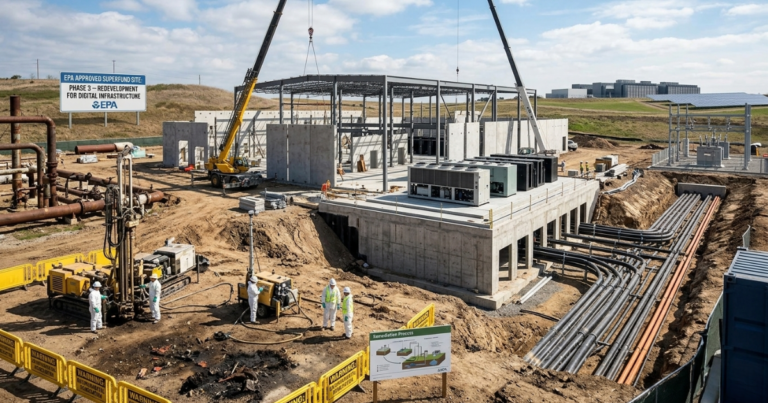
When contamination is confirmed, remediation planning becomes a defining factor in site viability. The type and extent of remediation required will depend on contaminant type, depth, migration potential, and intended land use. Data center developments often require higher confidence in subsurface stability due to their infrastructure density and long-term operational requirements.
Remediation strategies may include excavation and removal, in-situ treatment, containment systems, or long-term monitoring controls. Each approach carries implications for construction sequencing and regulatory approval timelines.
Effective remediation planning integrates environmental engineering with construction planning to ensure that site preparation does not conflict with infrastructure development schedules.
Supporting Services in Site Preparation and Risk Management
In addition to remediation, site selection on contaminated land often requires coordinated environmental services to ensure compliance and construction readiness. These include waste management, decommissioning of legacy infrastructure, and emergency preparedness in the event of unexpected contamination exposure during early works.
O6 Environmental supports these requirements through integrated field services, including Demolition & Dismantling Services, which assist in safely removing obsolete industrial structures while maintaining regulatory compliance and minimizing environmental disturbance.
Conclusion: Aligning Development Strategy with Environmental Reality
Data center development on brownfield sites offers strategic advantages but requires a disciplined approach to environmental risk management. EPA liability structures, contamination uncertainty, and remediation requirements all play a central role in determining whether a site is suitable for redevelopment.
O6 Environmental works with developers, facility owners, and regulated industries to ensure that environmental conditions are fully understood and appropriately managed before and during development. By integrating remediation planning into early site selection, projects can reduce regulatory risk and improve long-term operational certainty.
To learn more about how O6 Environmental supports complex industrial redevelopment projects, reach out to O6 Environmental to discuss your compliance needs.