
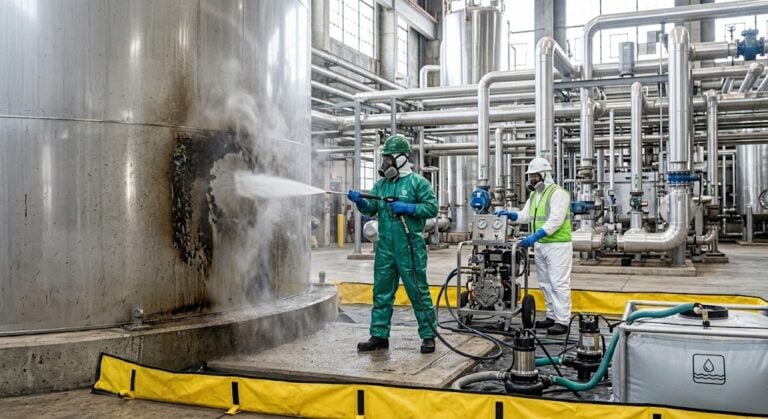
Industrial equipment can develop scale, deposits, process residues, and other buildup that interferes with inspection and maintenance. Hydroblasting uses high-pressure water to remove accumulated materials from equipment and surfaces, making it a useful method for certain industrial cleaning applications.
However, hydroblasting should be planned as more than a cleaning activity. Facilities also need to consider worker safety, containment, wastewater, removed materials, and what happens to the resulting waste.
When Hydroblasting May Be Used
Hydroblasting can be used in a variety of industrial maintenance applications. Depending on the equipment and site conditions, it may support cleaning of tanks, process equipment, piping, drains, and other surfaces.
The appropriate pressure and cleaning approach depend on the material being removed and the equipment being cleaned. A site-specific assessment can help determine whether hydroblasting is appropriate for the application.
Plan for the Material Being Removed
One of the most important considerations is what happens to the material after it is removed. Hydroblasting can mobilize accumulated residues, oils, sludge, scale, and other materials that must then be collected and managed.
Before work begins, facilities should consider containment, collection points, temporary storage, sampling requirements, and the final destination of the resulting material.
Wastewater and Containment Considerations
Water used during cleaning can become part of the waste stream. Facilities should prevent uncontrolled releases and establish appropriate collection and containment procedures.
Depending on the characteristics of the water and removed material, additional evaluation may be needed before treatment, transportation, discharge, or disposal.
Integrating Hydroblasting With Industrial Cleaning
Hydroblasting is often one component of a larger maintenance or cleaning project. Other activities may include vacuum recovery, tank cleaning, material removal, or preparation of equipment for inspection.
O6 Environmental provides Industrial Cleaning Services & Maintenance, including hydroblasting and other specialized industrial cleaning capabilities.
When cleaning generates contaminated liquids or solids, appropriate waste management should be incorporated into the project plan rather than addressed after the work is complete.
Safety Should Be Built Into the Work Plan
High-pressure water systems can present significant physical hazards. Work planning should address equipment operation, exclusion zones, personal protective equipment, access, containment, and procedures for unexpected conditions.
Facility personnel should also coordinate cleaning activities with other maintenance work so that equipment is properly isolated before cleaning begins.
Making Hydroblasting Part of a Complete Maintenance Strategy
Hydroblasting can help facilities remove difficult deposits and prepare equipment for maintenance, but successful projects require planning beyond the cleaning itself. Understanding the material being removed, controlling the work area, and planning for wastewater and waste management can help facilities complete cleaning activities more safely and efficiently.
Contact O6 Environmental to discuss industrial cleaning requirements and the environmental considerations associated with your maintenance project.