

As demand grows for new infrastructure, industrial facilities, energy projects, and technology-driven developments, many organizations are looking at previously used industrial properties as potential project locations. These sites can offer valuable advantages, including existing infrastructure, established transportation access, and strategic locations. However, properties with historical industrial use may also present environmental challenges that must be addressed before construction can move forward.
Contaminated sites require careful evaluation, regulatory coordination, and remediation planning to ensure they are suitable for redevelopment. Without proper environmental management, unexpected contamination issues can create project delays, increase costs, and introduce regulatory risks.
Why Contaminated Sites Require Environmental Planning Before Development
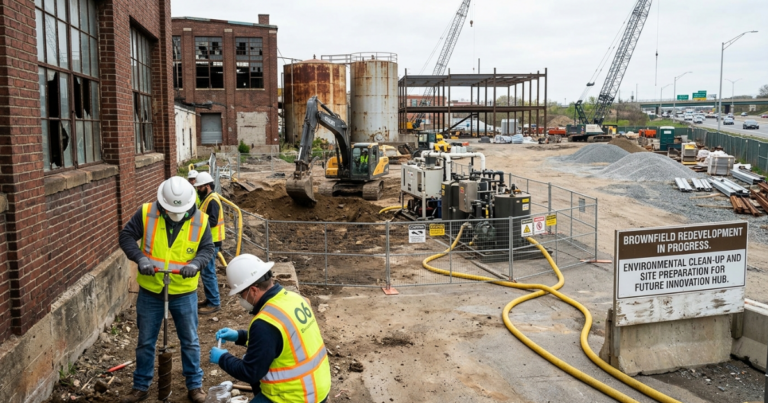
Former industrial properties may contain legacy contaminants resulting from previous operations, storage practices, manufacturing processes, or waste management activities. These contaminants can impact soil, groundwater, surface water, or existing structures on the property.
Before construction begins, project owners and developers need a clear understanding of environmental conditions at the site. Early assessment and planning help identify potential risks and determine the appropriate steps required to prepare the property for redevelopment.
- Identifying historical sources of contamination
- Evaluating soil and groundwater conditions
- Understanding regulatory requirements
- Developing a remediation strategy
- Reducing construction delays caused by unexpected environmental issues
The Role of Environmental Remediation in Site Preparation
Environmental remediation is a critical part of preparing contaminated properties for future use. The remediation process focuses on reducing or removing environmental hazards while ensuring the site meets applicable regulatory requirements.
Depending on site conditions, remediation strategies may include contaminated soil removal, groundwater treatment, waste management, containment solutions, or other corrective actions. Each project requires a customized approach based on the type of contamination, site history, and planned future use.
O6 Environmental provides Environmental Remediation Services designed to help organizations address complex environmental challenges and move redevelopment projects forward safely and responsibly.
Regulatory Compliance Considerations During Redevelopment
Large-scale infrastructure projects on previously developed properties often involve coordination with federal, state, and local environmental agencies. Compliance requirements may vary depending on site conditions, contamination levels, and the planned development activities.
Maintaining proper documentation, following approved remediation plans, and completing required environmental activities are essential for reducing regulatory risks. A structured compliance approach also helps project teams maintain transparency with stakeholders and avoid costly disruptions.
Managing Unexpected Environmental Challenges During Construction
Even with detailed planning, construction teams may encounter unexpected conditions such as previously unidentified contamination, impacted materials, or environmental hazards discovered during excavation and site preparation.
Having a qualified environmental partner available during construction can help address these challenges quickly. Response planning allows project teams to evaluate conditions, manage affected materials properly, and continue operations while maintaining compliance.
O6 Environmental supports organizations with Emergency Response & Clean-Up solutions when unexpected environmental issues require immediate attention.
Benefits of Proactive Environmental Planning
Addressing environmental considerations early in the development process provides several benefits for infrastructure projects. Proactive planning can help organizations:
- Reduce regulatory uncertainty
- Improve project scheduling and budgeting
- Identify environmental risks before construction begins
- Support safer work environments
- Prepare properties for successful long-term reuse
Conclusion
Infrastructure development on contaminated sites requires careful environmental planning, regulatory knowledge, and effective remediation strategies. By identifying risks early and implementing appropriate solutions, organizations can transform challenging properties into safe and productive locations for future development.
O6 Environmental helps businesses, municipalities, and organizations manage complex environmental projects through experienced remediation, compliance, and response services. Contact O6 Environmental to discuss your site development and environmental management needs.