
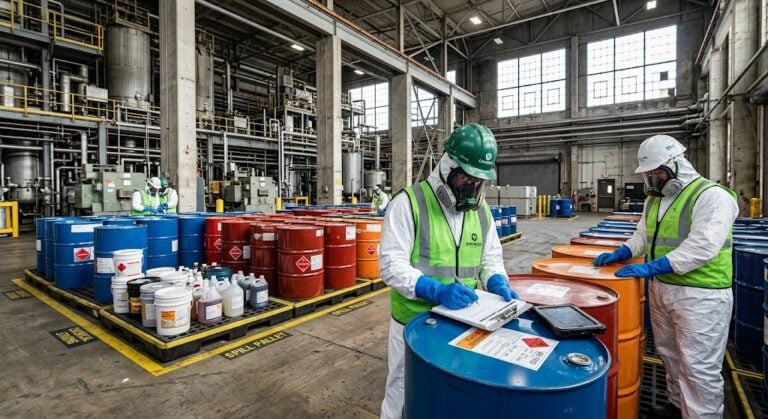
Industrial facilities can accumulate chemical containers over many years of operation. Some may be properly labeled and documented, while others may have damaged labels, outdated information, or no reliable identification at all. These materials can become a significant concern during facility cleanouts, shutdowns, renovations, or property transitions.
Why Unknown Containers Require Special Attention
A container that cannot be positively identified should not automatically be treated as ordinary waste. Its contents could include chemicals that are flammable, corrosive, reactive, toxic, or otherwise regulated.
Moving or opening an unknown container without understanding its contents can create unnecessary risks for employees and contractors. Facilities should establish procedures for identifying and segregating questionable materials before disposal activities begin.
Start With an Organized Inventory
The first step is generally to document what is present. Facility personnel can identify container locations, labels, container conditions, approximate quantities, and any available historical information.
Useful records may include:
- Previous chemical inventories
- Safety Data Sheets
- Purchasing records
- Process documentation
- Previous waste profiles
- Laboratory or maintenance records
Containers should remain appropriately secured while the facility determines how they should be managed.
Segregation Helps Reduce Unnecessary Risk
Different chemical materials should not simply be consolidated because they are all part of the same cleanout. Incompatible materials can create additional hazards if mixed or improperly stored.
Facilities should consider the condition of containers, available identification information, potential compatibility concerns, and applicable storage requirements when establishing temporary staging areas.
When Laboratory Packing May Be Appropriate
Facilities with numerous small containers, outdated chemicals, laboratory materials, or unidentified chemical products may require a structured approach to packaging and transportation.
O6 Environmental provides Industrial & Hazardous Waste Disposal capabilities for industrial waste streams, including characterization, segregation, profiling, manifesting, and transportation.
For emergency situations involving unknown or hazardous materials, specialized response planning may also be necessary. O6 Environmental’s Emergency Response & Clean-Up capabilities include emergency lab packs, leaking containers, fixed-facility incidents, and other hazardous-material response situations.
Documentation Should Continue Through Final Disposal
Identifying a container is only one part of responsible waste management. Facilities should maintain appropriate documentation through characterization, packaging, transportation, treatment, and disposal.
Good records can help demonstrate how materials were handled and provide useful information for future cleanouts or inspections.
Preparing for Future Facility Cleanouts
Unknown chemical containers are easier to manage when facilities maintain current inventories and clear storage practices throughout the year. Regular review of chemical storage areas can help prevent old or unidentified materials from accumulating unnoticed.
When a large cleanout is planned, early environmental planning can help identify potential problem areas before field activities begin. Contact O6 Environmental to discuss hazardous material management and facility cleanout requirements.