
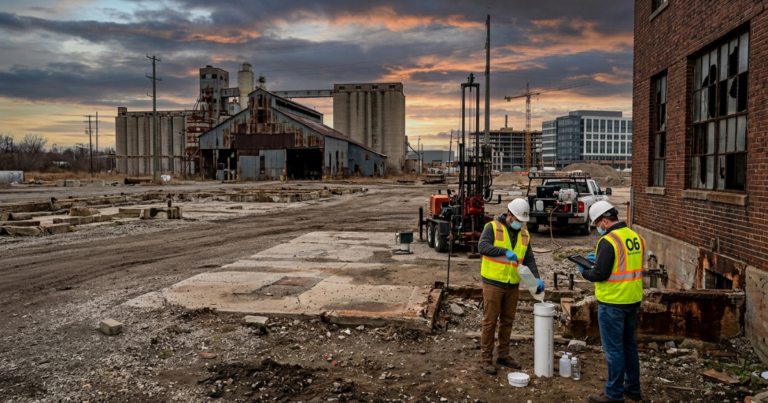
Former industrial properties can provide valuable opportunities for redevelopment, offering existing infrastructure, established locations, and large areas suitable for new construction. However, these properties may also carry environmental risks from previous industrial activities, including contamination, hazardous materials, or historical waste management practices.
Before construction begins, developers, property owners, and project managers should complete thorough environmental due diligence to understand potential risks and determine whether additional investigation or cleanup is required. Early planning helps reduce unexpected costs, regulatory challenges, and construction delays.
Why Environmental Due Diligence Matters Before Construction
Industrial properties often have long operational histories involving manufacturing, chemical processing, storage, fuel handling, or other activities that may affect environmental conditions. Even after operations stop, contamination can remain in soil, groundwater, structures, or subsurface areas.
Identifying these concerns before construction allows project teams to make informed decisions regarding property development, permitting requirements, construction timelines, and potential remediation needs.
Without proper environmental evaluation, unexpected issues discovered during construction can result in:
- Project delays and schedule disruptions
- Unexpected cleanup expenses
- Regulatory compliance challenges
- Worker safety concerns
- Additional engineering or design changes
Common Environmental Risks Found on Former Industrial Properties
Every former industrial site has unique conditions, but several environmental concerns are commonly identified during site investigations.
- Petroleum-contaminated soil
- Heavy metals and industrial chemicals
- Underground storage tanks
- Contaminated groundwater
- Hazardous building materials
- Historic waste disposal areas
- Vapor intrusion risks
Understanding these risks early allows developers to create realistic project budgets and construction schedules while addressing environmental responsibilities before work begins.
How Environmental Assessments Support Better Decision-Making
Environmental due diligence typically begins with an Environmental Site Assessment (ESA). A Phase I ESA evaluates historical property records, previous land uses, regulatory databases, and current site conditions to identify potential environmental concerns.
If additional investigation is needed, a Phase II ESA may involve soil, groundwater, or other sampling activities to determine the presence and extent of contamination.
These assessments help organizations:
- Identify environmental liabilities
- Understand potential cleanup requirements
- Support property transactions
- Improve construction planning
- Maintain regulatory compliance
Planning Remediation Before Construction Begins
When contamination is discovered, remediation planning should be integrated into the overall construction strategy. Addressing environmental issues early helps prevent unexpected interruptions once construction activities begin.
Professional Environmental Remediation Services can help manage contaminated soil, groundwater impacts, and other environmental concerns through solutions designed around site conditions and project requirements.
Early remediation planning can help teams:
- Develop practical cleanup strategies
- Coordinate environmental work with construction schedules
- Reduce project uncertainty
- Meet regulatory requirements
Managing Legacy Materials and Waste Concerns
Former industrial properties may also contain materials that require proper characterization, handling, transportation, and disposal before redevelopment can proceed.
Working with professionals experienced in Industrial & Hazardous Waste Disposal helps ensure impacted materials are managed safely while supporting compliance with environmental regulations.
Creating a Stronger Foundation for Successful Site Redevelopment
Environmental due diligence is an essential step when preparing former industrial properties for construction. By identifying potential risks early, developers can make informed decisions, reduce unexpected challenges, and create more predictable project outcomes.
Whether a property requires investigation, remediation, or waste management support, proactive environmental planning helps transform complex sites into safe and usable spaces for future development.