

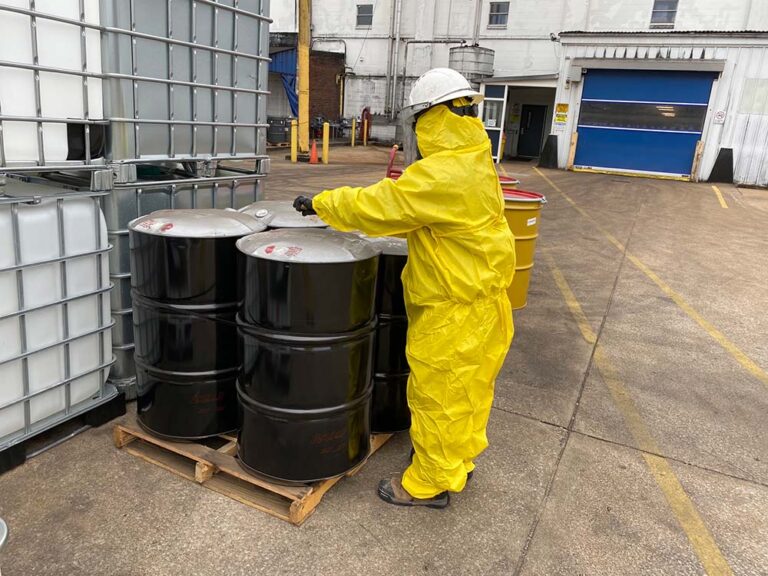
Why Waste Storage Compliance Matters
Improper storage of industrial waste is one of the most common causes of environmental violations. Even facilities that use licensed disposal vendors can face enforcement actions if waste is stored incorrectly prior to pickup.
Industrial waste storage requirements are designed to protect workers, prevent releases, and reduce environmental risk. O6 Environmental helps facilities understand and implement compliant storage practices before waste ever leaves the site.
What Counts as Industrial Waste
Industrial waste includes hazardous and non-hazardous materials generated during operations. Common examples include spent solvents, oily rags, contaminated soil, sludge, absorbents, chemical containers, and wastewater treatment residuals.
Each waste stream has specific storage requirements based on its classification.
Hazardous Waste Storage Requirements
Hazardous waste storage is regulated under the Resource Conservation and Recovery Act. Facilities must comply with strict accumulation rules.
- Containers must be in good condition and compatible with the waste
- All containers must remain closed except when adding or removing waste
- Hazardous waste labels must include proper wording and accumulation start dates
- Secondary containment may be required depending on the waste type
- Accumulation time limits apply based on generator status
Non-Hazardous Industrial Waste Storage
Non-hazardous waste is subject to fewer regulations but still requires proper management.
- Waste must be stored to prevent leaks or releases
- Containers should be labeled clearly to avoid misclassification
- Storage areas must be maintained to prevent stormwater contamination
- Waste should be removed on a regular schedule
Common Storage Violations
Inspectors frequently cite facilities for avoidable storage issues.
- Missing or incorrect labels
- Open containers
- Expired accumulation time limits
- Poor housekeeping in waste areas
- Incompatible waste stored together
How O6 Environmental Helps
O6 Environmental supports clients by reviewing waste storage areas, verifying classifications, improving labeling and containment, and coordinating compliant disposal.
Proper storage protects your facility, your employees, and your compliance record.