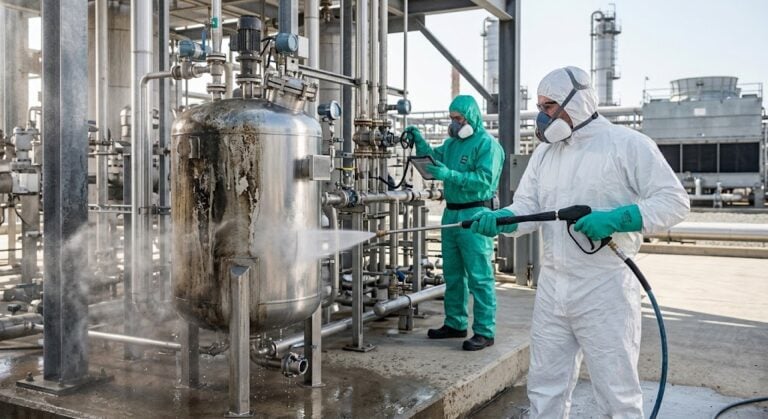
Industrial process equipment can accumulate oils, chemical residues, sludge, scale, and other materials during normal operations. When equipment requires maintenance, inspection, repair, or modification, those accumulated materials can create additional safety and environmental concerns. Cleaning the equipment before work begins can help maintenance teams better understand site conditions and reduce the potential for exposure or improper material handling.
Why Equipment Cleaning May Be Necessary Before Maintenance
Equipment that has been in service for years may contain residual materials even after it has been taken offline. Tanks, vessels, piping, process lines, and other components can retain liquids, solids, vapors, or deposits that are not immediately visible.
Pre-maintenance cleaning may be appropriate when equipment will be:
- Opened for inspection or repair
- Disassembled or relocated
- Modified as part of a process change
- Removed from service
- Prepared for welding, cutting, or other hot work
The appropriate cleaning method depends on the equipment, materials involved, and the condition of the system.
Identifying Residual Materials Before Work Begins
Before cleaning or maintenance starts, facility personnel should understand what the equipment previously contained and whether residual materials could present chemical, environmental, or physical hazards.
Relevant information may include previous process materials, Safety Data Sheets, operating history, waste characteristics, and previous cleaning records. Where the contents are unknown, additional evaluation may be necessary before work proceeds.
Choosing the Right Cleaning Approach
Industrial cleaning methods can vary considerably depending on the equipment and material being removed. Wet or dry vacuuming, hydroblasting, air knife systems, and other specialized methods may be used depending on site conditions.
Cleaning should also account for what happens to the material after removal. Residues, liquids, sludge, or contaminated solids may require appropriate collection, characterization, transportation, and disposal rather than simply being removed from the equipment and left on site.
O6 Environmental provides Industrial Cleaning Services & Maintenance for industrial environments, including wet and dry vacuum services, tank and vessel cleaning, hydroblasting, and specialized cleaning applications.
Coordinating Cleaning With Maintenance Activities
Cleaning should be incorporated into the maintenance plan rather than treated as an isolated activity. Facility teams should establish who is responsible for isolating equipment, verifying conditions, managing removed materials, and documenting completed work.
Good coordination can help reduce delays while giving maintenance personnel a clearer understanding of the equipment before work begins.
Managing Materials Removed During Cleaning
Cleaning can generate waste streams that require additional management. Depending on their characteristics, these materials may need to be segregated, profiled, transported, and treated or disposed of through an appropriate facility.
O6 Environmental provides Industrial & Hazardous Waste Disposal services that include waste characterization, segregation, profiling, manifesting, and transportation to qualified treatment, storage, and disposal facilities.
Planning Cleaning as Part of the Maintenance Process
Cleaning industrial equipment before maintenance can help facilities address residual materials before they become a larger operational or environmental concern. By evaluating equipment history, selecting an appropriate cleaning method, and planning for the resulting waste stream, facility teams can integrate environmental considerations into routine maintenance activities.
Contact O6 Environmental to discuss industrial cleaning, waste management, and other environmental requirements associated with your facility.